Fastest Train Spain: Live Status, Schedule, Routes and Tickets
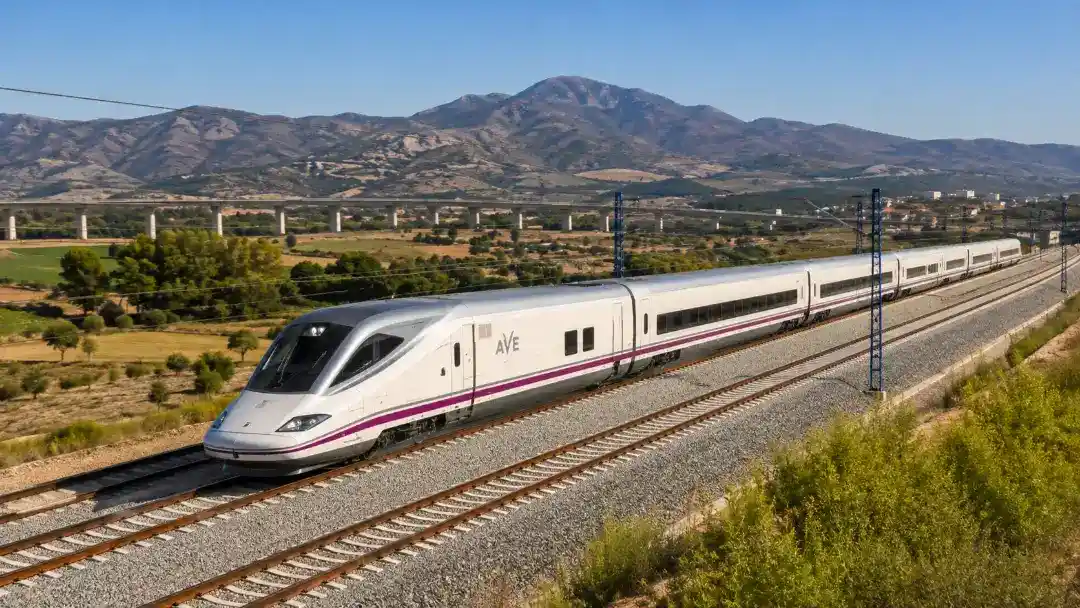
The AVE is the fastest train Spain operates, reaching a top speed of 193 mph on the Madrid to Barcelona line, one of the fastest conventional rail routes in Europe. Two newer private operators, Ouigo España and Iryo, now run alongside Renfe’s AVE on some of the busiest corridors, giving travelers more choice on price and schedule. Here you’ll find current status, full timetables, station stops, ticket booking and what is actually coming next for high speed rail in Spain. You can use our Train speed test to compare these speeds against France, Japan and other countries.
Quick Facts
The AVE is the fastest train Spain runs today, reaching 193 mph on parts of the Madrid to Barcelona line, the backbone of the country’s high speed network. Spain is unusual in having genuine competition on its busiest routes, with Ouigo España and Iryo now operating alongside Renfe’s AVE between major cities. The fastest train from Madrid to Barcelona covers roughly 386 miles in around two and a half hours, among the quickest city pair connections in Europe. Try the speedometer online to check your own train speed live with just your phone or laptop, and see how Spain’s network compares globally. Spain also has one of the largest high speed rail networks in the world by total track length, second only to China.
Live Train Status
Checking real time status takes less than a minute and saves you from guessing at the station. Here is where to look depending on which operator you are riding.
How to Check Renfe AVE Status
Renfe publishes live train status on its official site and app, showing delays and platform information for AVE, Avlo and other services across the network.
How to Check Ouigo and Iryo Status
Ouigo España and Iryo each run their own status pages and apps, since they operate independently from Renfe despite sharing the same high speed infrastructure.
Common Causes of Delay
Signal issues and infrastructure maintenance on shared sections of track are the most common causes of delay, along with occasional weather disruption in mountainous regions the network passes through. Delays are relatively rare compared with countries running high speed trains on shared freight track, since Spain’s AVE lines are largely dedicated to passenger service.
Schedule and Route Finder
Use the tool below to select a country, operator and route to see live style stop lists, sample daily departures and journey times in one place.
Train schedule and route finder
Pick a country and route to see stops, timings and booking links.
Stops and stop to stop times
| Station | From origin | Typical departure |
|---|
Sample daily departures
| Departs | Arrives | Duration |
|---|
Spain’s tool coverage includes AVE alongside its two newer private competitors, Ouigo España and Iryo, reflecting the genuine competition that now exists on routes like Madrid to Barcelona.
Understanding Spain’s Three High Speed Operators
Spain opened its high speed network to competition in 2021, making it one of the only countries where private companies compete directly with the state operator on the same track. This matters for pricing and schedule choice on the busiest routes.
Renfe AVE
Renfe’s AVE is the original and largest operator, running the most extensive route network and generally offering the widest range of departure times and ticket classes.
Ouigo España
Ouigo España is a low cost operator backed by France’s SNCF, running a no frills service with simpler ticket tiers, typically at lower fares than AVE.
Iryo
Iryo is a joint venture between Air France-KLM, Trenitalia and other partners, positioned between Ouigo’s low cost model and AVE’s fuller service offering.
Train Schedules and Timetables
Departure frequency varies by route and operator, with Madrid to Barcelona seeing the most competition and the most frequent service.
Madrid to Barcelona Weekday Schedule
Combined AVE, Ouigo and Iryo departures run roughly every 30 to 45 minutes at peak times, making this one of the most frequently served high speed corridors in Europe.
Madrid to Seville Schedule
This route, Spain’s original AVE line dating to 1992, runs primarily under Renfe with departures roughly every hour on weekdays.
Weekend Schedules
Weekend frequency drops slightly across most routes, though Madrid to Barcelona still runs frequently given the volume of competing operators.
Routes, Stations and Stop to Stop Times
Each operator serves a similar set of major stations on shared track, though not every operator stops at every station.
Fastest Train from Madrid to Barcelona
This is the busiest and most competitive AVE corridor, covering Madrid, Zaragoza and Barcelona. The direct AVE service covers the roughly 386 mile route in around two and a half hours.
Train from Madrid to Seville
Spain’s original high speed line, connecting Madrid, Córdoba and Seville in around two and a half hours across roughly 330 miles.
Barcelona to Valencia
This coastal route connects two of Spain’s largest cities in around three hours, run primarily by AVE with some Avlo service.
Madrid to Málaga
This southern route connects the capital to the Costa del Sol in around two and a half hours, covering roughly 320 miles on AVE.
Málaga to Seville
A shorter regional link between two major Andalusian cities, this route takes under two hours and connects with both the Madrid to Málaga and Madrid to Seville lines.
Stop to Stop Times
Madrid to Zaragoza takes about an hour and twenty minutes. Zaragoza to Barcelona takes around an hour and ten minutes. Madrid to Córdoba on the Seville line takes about an hour and forty minutes.
Booking and Tickets
Buying direct from the operator is almost always cheaper and more reliable than third party resellers, especially given how differently AVE, Ouigo and Iryo structure their fares.
How to Book AVE Tickets
Tickets are sold directly through Renfe’s official site or app. Fares are dynamic and rise closer to departure, with the cheapest fares typically available several weeks in advance.
How to Book Ouigo and Iryo Tickets
Each operator sells tickets through its own website and app. Ouigo’s fare structure is generally simpler and lower cost, while Iryo sits in between Ouigo and AVE on both price and included extras.
Ticket Classes
AVE offers Turista, Turista Plus and Preferente classes, while Ouigo and Iryo use their own simplified tiers, often bundling baggage and flexibility differently than Renfe does. Renfe also runs Avlo, a lower cost high speed tier separate from full AVE service, with fewer included extras similar in spirit to Ouigo.
Best Time to Book
Booking two to four weeks ahead generally secures the lowest fares across all three operators, since prices rise as each departure fills up closer to the travel date.
Train Specs and Technology
The current AVE fleet includes Talgo and Siemens built trainsets capable of the network’s 193 mph top speed, running on dedicated high speed track separate from conventional and freight lines across most of the network. Ouigo España uses double decker TGV trainsets sourced from SNCF’s existing high speed fleet, while Iryo operates Frecciarossa trains built by Hitachi Rail, the same platform used on Italy’s high speed network.
Why Spain Built So Much High Speed Track
Spain’s high speed network is the largest in Europe by total track length, a result of sustained government investment beginning with the original Madrid to Seville line in 1992. Unlike networks that grew around existing conventional track, most of Spain’s high speed lines were built from scratch on dedicated right of way, which is part of why the fastest train Spain operates can sustain high average speeds across long distances.
Spain vs the World
|
Country |
Fastest Train |
Top Speed |
|---|---|---|
|
Japan |
L0 Series Maglev (testing) |
374 mph |
|
France |
TGV |
357 mph |
|
China |
Fuxing |
260 mph |
|
Spain |
AVE |
193 mph |
|
Germany |
ICE |
190 mph |
|
USA |
Brightline West (in progress) |
186 mph |
|
Canada |
VIA Rail |
100 mph |
Compared globally, the fastest train Spain runs sits just behind Germany’s ICE and well behind France and Japan, but Spain’s network compensates with sheer scale, connecting far more cities at high speed than most countries manage.
What Is Coming Next
Extensions to the high speed network continue, including planned links to smaller regional cities not yet connected to AVE service. Competition among AVE, Ouigo and Iryo is also expected to expand to additional routes beyond the current Madrid, Barcelona, Seville and Valencia corridors. For a deeper look at how Spain’s high speed network developed and where AVE fits into Europe’s broader high speed rail picture, see our detailed guide on high speed trains in Spain.
Tips for Riding the Fastest Train in Spain
Luggage allowances vary noticeably by operator. AVE includes generous standard allowances, while Ouigo charges extra for larger bags unless a higher fare tier is selected. Seat reservations are included with every ticket across all three operators, so there is no need to arrive especially early. Arriving at least twenty minutes before departure is generally enough at major stations like Madrid Atocha or Barcelona Sants, though security screening at some stations can add extra time during peak travel periods.
Conclusion – Fastest Train Spain
The AVE remains the fastest train Spain operates, though Ouigo España and Iryo now offer real competition on the country’s busiest routes, especially Madrid to Barcelona. Spain’s high speed network stands out globally not for having the single fastest train, but for the scale and competition now built into it. Booking ahead and comparing all three operators on a given route remains the best way to find the fastest and most affordable journey.