Canada Fastest Train:
Live Speed, Schedule, Routes and Tickets
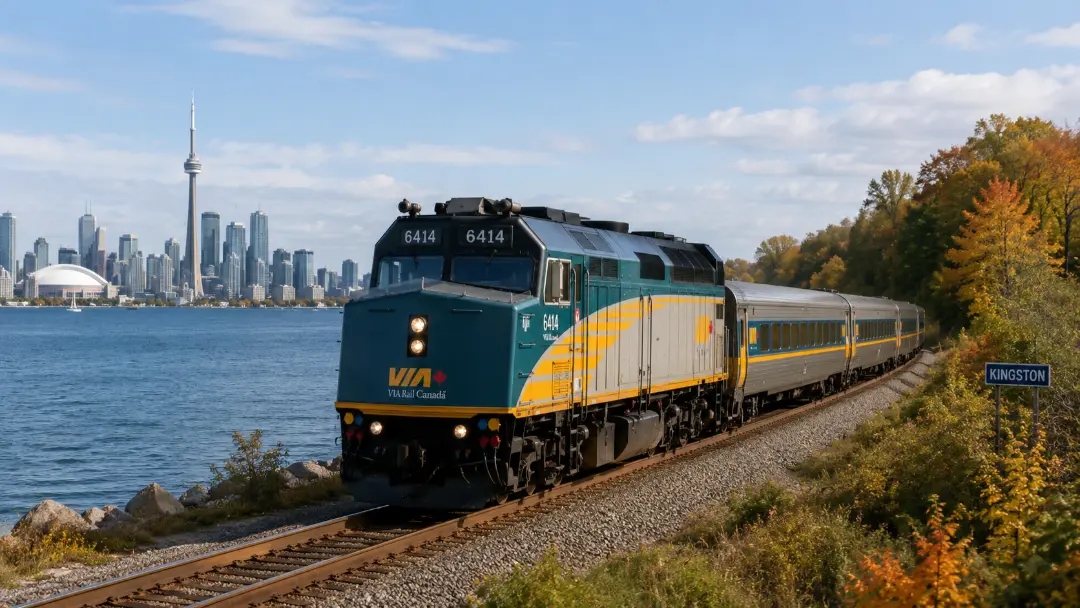
VIA Rail operates the canada fastest train service today (1), with its Corridor trains reaching a top speed of 100 mph or 160 km/h on sections of track between Toronto and Montreal. There is no dedicated high speed line anywhere in the country yet, so every VIA Rail train shares track with freight traffic for most of its journey. Here you’ll find current status, full timetables, station stops, ticket booking and what is actually coming next for high speed rail in Canada. You can use our Train speed test to compare these speeds against Japan, France and other countries.
Quick Facts
VIA Rail is the operator behind the canada fastest train (2), reaching a top speed of 100 mph or 160 km/h on parts of the Kingston Subdivision between Toronto and Montreal. The busiest and quickest link is the run from Toronto to Montreal, which covers the core of the Quebec City to Windsor Corridor where most Canadian rail traffic runs. There is currently only one operator running intercity rail at this scale in Canada, unlike countries with several competing high speed companies. Try the speedometer online to check your own train speed live with just your phone or laptop, and see how VIA Rail stacks up against faster services abroad. A new High Frequency Rail project aims to change this picture over the next decade with dedicated passenger track.
Live Train Status
Checking real time status takes less than a minute and saves you from guessing at the station. Here is where to look before you travel.
How to Check VIA Rail Status
VIA Rail publishes live train status on its website and mobile app under the Track My Train section. Enter your train number or route and the app shows current position, expected delays and platform information for each stop. This is the quickest way to track VIA Rail service in real time before you head to the station.
Common Causes of Delay
Freight traffic sharing the same track is the single biggest cause of delays on VIA Rail’s network, since Canadian freight companies own most of the rail corridor. Winter weather in Ontario and Quebec, aging signal infrastructure and single track sections that force trains to wait for oncoming traffic also contribute to regular delays, especially outside the busiest Toronto to Montreal and Toronto to Ottawa segments.
Schedule and Route Finder
Use the tool below to select a country, operator and route to see live style stop lists, sample daily departures and journey times in one place.
Train schedule and route finder
Pick a country and route to see stops, timings and booking links.
Stops and stop to stop times
| Station | From origin | Typical departure |
|---|
Sample daily departures
| Departs | Arrives | Duration |
|---|
Runs on shared conventional track; Canada currently has no true high speed rail in operation. Top speed only reached on short stretches of the Kingston Subdivision; average speed is lower due to shared freight track and single track sections.
Train Schedules and Timetables
Departure frequency changes depending on the day and the route, so it helps to know what to expect before you plan a trip.
Toronto to Montreal Weekday Schedule
VIA Rail runs several trains a day on this route on weekdays, generally spaced two to three hours apart, with a mix of standard stops and faster limited stop departures.
Weekend Schedule
Weekend service runs less frequently, typically with three to four trains a day instead of the full weekday lineup.
Toronto to Ottawa Schedule
This route also runs several times daily, usually taking around four hours with stops in Kingston and other Corridor towns.
Routes, Stations and Stop to Stop Times
VIA Rail covers a fixed set of stations across the Corridor, and knowing the stop order helps you plan connections or pick the closest station to your destination.
Fastest Train from Toronto to Montreal
This is the busiest run on the network, covering Toronto, Oshawa, Cobourg, Belleville, Kingston, Brockville, Cornwall and Montreal. Total distance is 335 miles and the full run takes close to five hours, though limited stop departures can be somewhat quicker.
Toronto to Ottawa
This route covers Toronto, Guildwood, Oshawa, Kingston and Ottawa across roughly 280 miles in about four hours.
Stop to Stop Times
Toronto to Kingston typically takes about two and a half hours. Kingston to Montreal takes roughly two hours. Toronto to Ottawa on the direct service runs close to four hours.
Booking and Tickets
Buying direct from the operator is almost always cheaper and safer than third party resellers. Here is how the ticket process works.
How to Book VIA Rail
Tickets are sold directly through viarail.ca or the VIA Rail app. Fares are dynamic and rise closer to departure, similar to airline pricing, with lower Economy fares available further in advance.
Ticket Classes
VIA Rail offers Economy, Business and Business Plus on most Corridor routes, with differences in seating width, meal service and lounge access at major stations.
Best Time to Book
Booking two to three weeks ahead generally secures lower fares on the canada fastest train routes, since prices climb as each departure fills up closer to the travel date.
Train Specs and Technology
VIA Rail’s Corridor fleet includes the Siemens built Venture trainsets, introduced to replace older equipment on the busiest routes including Toronto to Montreal and Toronto to Ottawa. These trains are more efficient and comfortable than the fleet they replaced, but they run at largely the same top speed since the track itself, not the equipment, is the main limiting factor. Nearly the entire Corridor runs on shared freight owned track, which is the core reason the canada fastest train still falls well short of international high speed benchmarks.
Canada vs the World
|
Country |
Fastest Train |
Top Speed |
|---|---|---|
|
Japan |
L0 Series Maglev |
374 mph |
|
France |
TGV |
357 mph |
|
China |
Fuxing |
260 mph |
|
Spain |
AVE |
193 mph |
|
Germany |
ICE |
190 mph |
|
USA |
Brightline West (in progress) |
186 mph |
|
Canada (planned) |
High Frequency Rail |
up to 110 mph |
|
Canada (current) |
VIA Rail |
100 mph |
Compared globally, the canada fastest train trails well behind Japan, France and China, and even behind the current fastest train in the USA, largely because Canada has never built a dedicated passenger rail line.
Why Is Canada Fastest Train So Much Slower Than Europe and Asia
The gap comes down to ownership of the track, not the trains themselves. Freight companies own almost the entire Corridor that VIA Rail operates on, so passenger trains must yield to freight movements and follow speed limits set for mixed traffic. Japan, France and China built dedicated lines exclusively for passenger service, letting trains hold top speed for long stretches without interruption. Until Canada builds its own dedicated track, the canada fastest train will keep lagging behind its international counterparts regardless of how modern the equipment becomes.
What Is Coming Next
High Frequency Rail is the main project set to reshape Canadian passenger rail, adding dedicated track along parts of the Toronto to Quebec City Corridor and increasing both frequency and reliability. The project is still in early development, with construction not yet underway and a full timeline still years out. Unlike Brightline West in the USA or California High Speed Rail, this project is not designed to reach true high speed rail territory, but it is expected to meaningfully cut current journey times once complete. No dedicated high speed line currently exists anywhere in Canada, so travel today still depends entirely on the existing VIA Rail Corridor fleet.
Tips for Riding the Fastest Train in Canada
Luggage allowance on VIA Rail includes two checked bags and additional carry on items per passenger at no extra cost, with specific limits varying slightly by class. Seat reservations are included with every ticket, so there is no need to arrive especially early to secure a seat. VIA Rail sells a Canrailpass covering multiple trips over a set period across its full network, which can be worth considering for longer trips beyond the Corridor. Arriving at Union Station in Toronto or Central Station in Montreal at least twenty minutes before departure is enough for most Corridor trips.
Conclusion
VIA Rail remains the canada fastest train today, with the Toronto to Montreal and Toronto to Ottawa routes carrying the bulk of Corridor traffic. Speeds still fall well short of international high speed rail standards, mainly because the track itself is shared with freight rather than built specifically for passenger service. High Frequency Rail is the closest project to changing that picture, though it remains years from completion. Until then, booking early and choosing the right departure remain the best ways to get the fastest possible journey on Canada’s rail network.