
Fastest Train India:
Live Status, Schedule, Routes and Tickets
The Gatimaan Express holds the title of fastest train India has run since 2016, reaching 160 km/h between Delhi and Agra, a speed no other train on the network matched for years. That’s changing fast. Vande Bharat, India’s newer semi-high-speed push, now runs on dozens of routes and is designed to eventually match or beat Gatimaan’s speed nationwide. Alongside these sit the older workhorses, Shatabdi for daytime intercity travel and Rajdhani for premier overnight runs, both still central to how people actually book trains in India. Here you’ll find current status, full timetables, station stops, ticket booking, train speed test and what is actually coming next for high speed rail in India.
Quick Facts
Gatimaan Express is the fastest train India operates on conventional track, covering Delhi to Agra’s roughly 188 km in under two hours at a top speed of 160 km/h. For travellers who want to compare real-time speeds with published train limits, a speedometer online tool can also provide a useful reference during a journey. Vande Bharat is the country’s fastest-growing train class, semi-high-speed and designed for 160 km/h running, though most routes currently operate below that due to track conditions rather than the train’s own limits. Shatabdi Express remains the standard for same-day intercity travel on shorter routes, while Rajdhani Express is reserved for premier overnight journeys between major cities, both slower than Gatimaan or Vande Bharat but far more widely available. India’s first passenger train ran in 1853 between Bombay and Thane, and the network has grown into one of the largest in the world, though its longest single train today still runs over 4,000 km coast to coast.
Live Status and Delays
Checking status ahead of time matters given how much of the network still runs on shared conventional track.
How to Check Gatimaan and Vande Bharat Status
Indian Railways’ official site and app show live running status for both by train number, including real time delay estimates and platform information.
How to Check Shatabdi and Rajdhani Status
Both use the same national tracking system, searchable by train number or route, and are generally reliable given their priority scheduling on most routes.
Common Causes of Delay
Fog in North India during winter, especially on Delhi routes, is one of the most common causes of delay, along with track maintenance windows and the sheer volume of freight and passenger traffic sharing the same lines across much of the network.
Schedule and Route Finder
Pick a route below to see stops, timings and fare ranges without digging through separate booking sites.
Train schedule and route finder
Pick a country and route to see stops, timings and booking links.
Stops and stop to stop times
| Station | From origin | Typical departure |
|---|
Sample daily departures
| Departs | Arrives | Duration |
|---|
India’s tool coverage centers on Gatimaan Express as the fastest conventional service, alongside Vande Bharat, Shatabdi and Rajdhani as the other major fast and premier classes.
Gatimaan Express: Delhi to Agra
This is the route that made Gatimaan Express India’s fastest train, covering Delhi Hazrat Nizamuddin to Agra Cantt in under two hours, well ahead of every other train on the same corridor. It briefly extends to Jhansi and Gwalior on some services, though the core Delhi-Agra run remains the headline route.
Vande Bharat: India’s Expanding Fast Train
Vande Bharat isn’t one route, it’s a growing class now running on corridors like Delhi-Varanasi, Mumbai-Ahmedabad, Chennai-Bangalore and dozens more. Built for 160 km/h operation, most current routes run slower in practice because the surrounding track and signaling haven’t caught up yet, similar to how Gatimaan itself is capped by shared infrastructure outside its dedicated stretch.
Shatabdi Express: Same-Day Intercity Travel
Shatabdi covers shorter city-pair routes as a same-day service, popular on corridors like Delhi-Bhopal, Delhi-Amritsar and Delhi-Lucknow. It’s not the fastest train India runs, but it remains one of the most heavily booked for business travel.
Rajdhani Express: Premier Overnight Travel
Rajdhani connects Delhi to state capitals overnight, prioritized heavily on the network, and remains the standard for longer distance premier travel where Vande Bharat and Gatimaan don’t yet reach.
Booking and Tickets
When travelling on the fastest train India offers, booking options and ticket classes vary depending on the service and route you choose.
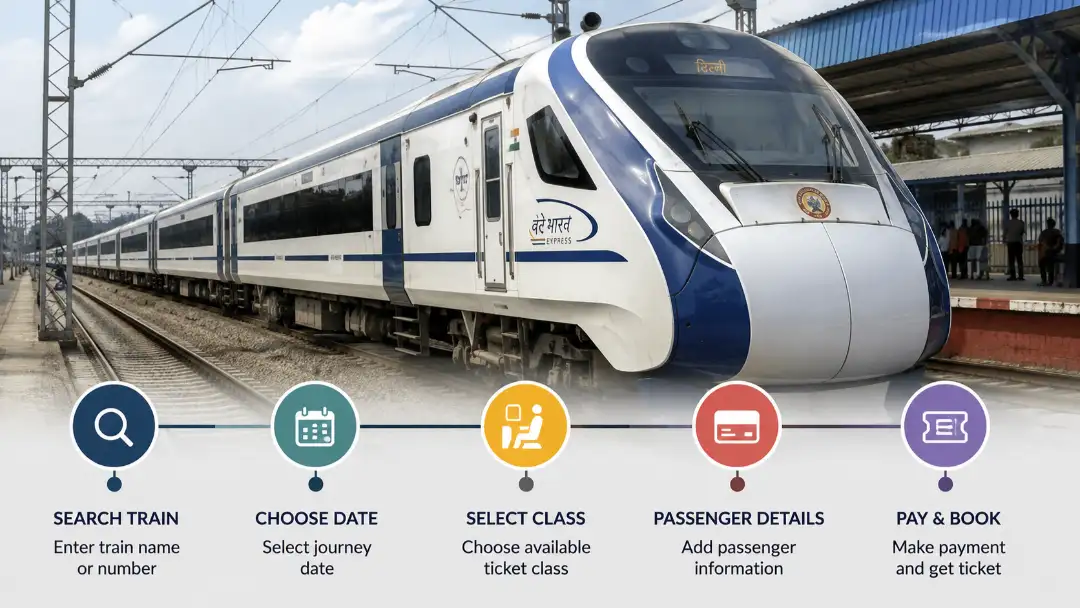
How to Book Any of These Trains
All are booked through IRCTC, India’s official rail ticketing platform, either via the website or app, using the train name or number.
Ticket Classes
Gatimaan and Vande Bharat offer Chair Car and Executive Chair Car. Shatabdi mirrors this structure, while Rajdhani offers sleeper classes including First AC, Second AC and Third AC given its overnight schedule.
Best Time to Book
Tickets open 120 days in advance and popular routes, especially Gatimaan, Vande Bharat and Rajdhani on festival periods, fill up well before departure, so booking as early as the window allows is the most reliable way to secure a seat.
Why Gatimaan and Vande Bharat Are Still Capped Below Global High Speed Standards
Neither train is limited by its own technology so much as by the track it runs on. Most of India’s rail network, including the stretches Gatimaan and Vande Bharat use, is shared conventional track built for a mix of freight and passenger traffic, not dedicated high speed lines built from scratch the way Japan’s Shinkansen or Spain’s AVE network were. That’s the same story told across nearly every country on this site that hasn’t invested in dedicated infrastructure.
Fastest Train India vs the World
The fastest train India has to offer is considerably slower than the high speed trains operating in Japan, France, China and other major rail networks around the world.
|
Country |
Fastest Train |
Top Speed |
|---|---|---|
|
Japan |
L0 Series Maglev (testing) |
374 mph |
|
France |
TGV |
357 mph |
|
China |
Fuxing |
260 mph |
|
Spain |
AVE |
193 mph |
|
Germany |
ICE |
190 mph |
|
USA |
Brightline West (in progress) |
186 mph |
|
UK |
Southeastern Highspeed Javelin |
140 mph |
|
Canada |
VIA Rail |
100 mph |
|
India |
Gatimaan Express |
99 mph (160 km/h) |
|
Australia |
Queensland Tilt Train |
99 mph (160 km/h) |
The fastest train India runs sits well behind the true high speed leaders, though it’s on par with countries like Canada and Australia that also lack dedicated high speed infrastructure.
What Is Coming Next
India’s first genuine dedicated high speed line, the Mumbai-Ahmedabad bullet train project using Japanese Shinkansen technology, is under construction and expected to be the country’s first true high speed rail corridor once complete, targeting speeds well above what Gatimaan or Vande Bharat can currently reach. Vande Bharat’s rollout is also continuing to expand to new routes, gradually replacing older Shatabdi services on several corridors.
Riding Gatimaan and Vande Bharat
Both trains include onboard catering as part of the fare, a step up from older classes where meals are typically purchased separately. Executive Chair Car offers noticeably more legroom and priority boarding on both trains. If your route also has a Shatabdi or Rajdhani option, compare timing and price carefully, the fastest option isn’t always the cheapest or most convenient departure time.
Conclusion – Fastest Train India
Gatimaan Express remains the fastest train India runs on conventional track, though Vande Bharat’s expanding network is steadily closing the gap and will likely take over the title as more routes come online at full speed. Shatabdi and Rajdhani continue to handle the bulk of everyday intercity and overnight travel, slower but far more widely available. The Mumbai-Ahmedabad bullet train project is the one to watch if India is going to move beyond conventional track limitations altogether.