Fastest Train Japan: Live Status, Schedule, Routes and Tickets
The L0 Series maglev is the fastest train Japan has ever tested, reaching 374 mph during trial runs on the Chuo Shinkansen line, though it is not yet in commercial service. For now, the fastest train Japan actually operates day to day is the Tokaido Shinkansen’s Nozomi service, reaching a top speed of 200 mph between Tokyo and Osaka. Japan’s network is split across four separate JR companies, each running its own Shinkansen lines and equipment. Here you’ll find current status, full timetables, station stops, ticket booking and what is actually coming next for high speed rail in Japan. You can use our Train speed test to compare these speeds against France, China and other countries.
Quick Facts
The Nozomi service on the Tokaido Shinkansen is the fastest train Japan currently runs in regular passenger service, reaching 200 mph between Tokyo and Shin Osaka under JR Central. Japan’s high speed network is not run by a single company. JR Central, JR East, JR West and JR Kyushu each operate their own Shinkansen lines, equipment and fare systems, so trip planning often means crossing operator boundaries. The L0 Series maglev, tested by JR Central on the Yamanashi test track, has reached 374 mph, faster than any train in commercial operation anywhere in the world. Try the speedometer online to check your own train speed live with just your phone or laptop, and see how Japan’s network compares globally. Once the Chuo Shinkansen maglev line opens between Tokyo and Nagoya, it will become the fastest train Japan has ever put into commercial service.
Live Train Status
Checking real time status takes less than a minute and saves you from guessing at the platform. Here is where to look depending on which JR company you are riding.
How to Check JR Central Status
JR Central publishes live train status for the Tokaido Shinkansen on its official site and through station display boards, showing delays and platform changes for Nozomi, Hikari and Kodama services between Tokyo and Shin Osaka.
How to Check JR East, JR West and JR Kyushu Status
Each company runs its own status page for its respective Shinkansen lines, covering routes such as Tohoku, Hokuriku, Sanyo and Kyushu Shinkansen. Status boards at major stations like Tokyo, Shin Osaka and Hakata combine information from whichever operator serves that platform.
Common Causes of Delay
Earthquakes and severe weather are the leading causes of delay on Japan’s Shinkansen network, since the system automatically halts trains during seismic activity as a safety measure. Snow in northern regions served by JR East and heavy rain during typhoon season also cause scheduled slowdowns or temporary suspensions.
Schedule and Route Finder
Use the tool below to select a country, operator and route to see live style stop lists, sample daily departures and journey times in one place.
Train schedule and route finder
Pick a country and route to see stops, timings and booking links.
Train schedule and route finder
Pick a country and route to see stops, timings and booking links.
Stops and stop to stop times
| Station | From origin | Typical departure |
|---|
Sample daily departures
| Departs | Arrives | Duration |
|---|
Japan’s tool coverage includes all four JR companies operating Shinkansen service, JR Central, JR East, JR West and JR Kyushu, reflecting how the country’s high speed network is actually structured rather than treating it as a single operator.
Understanding Japan’s Four Shinkansen Operators
Unlike the USA or Canada, where one or two operators cover the whole network, Japan’s Shinkansen system is split by region and company. This matters for booking, passes and which trains count as the fastest train Japan has to offer on any given route.
JR Central: Tokaido Shinkansen
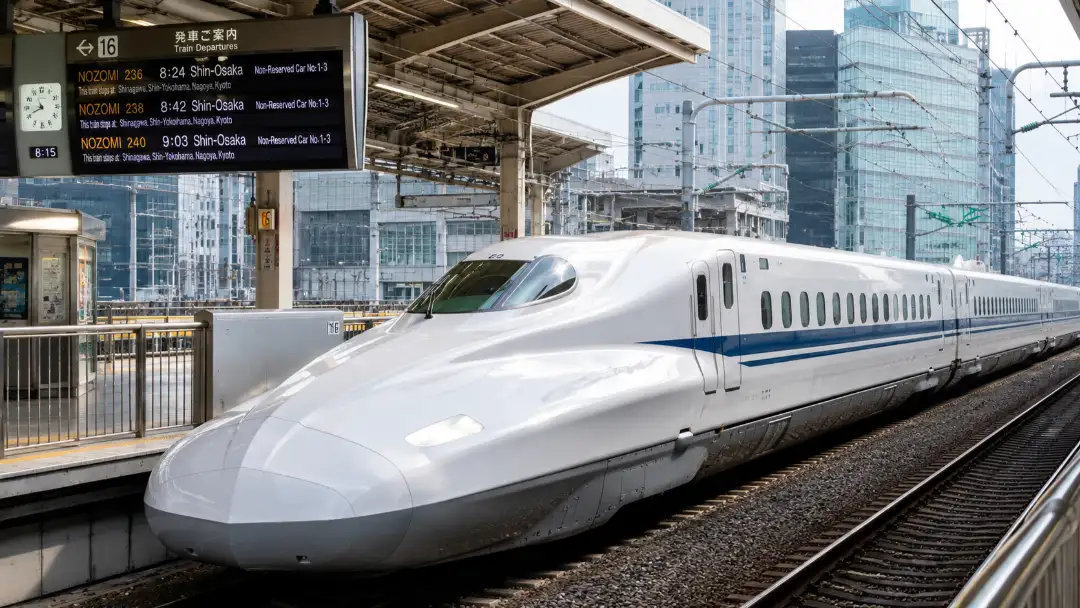
JR Central runs the Tokaido Shinkansen between Tokyo and Shin Osaka, the busiest and fastest conventional line in the country. Nozomi is the fastest service, Hikari stops slightly more often, and Kodama stops at every station.
JR East: Tohoku, Joetsu and Hokuriku Shinkansen
JR East covers northern Japan, running the Tohoku Shinkansen toward Aomori and Hokkaido, the Joetsu Shinkansen toward Niigata, and part of the Hokuriku Shinkansen toward Kanazawa.
JR West: Sanyo and part of Hokuriku Shinkansen
JR West operates the Sanyo Shinkansen, extending the Tokaido line from Shin Osaka to Hakata, plus the western portion of the Hokuriku Shinkansen.
JR Kyushu: Kyushu Shinkansen
JR Kyushu runs the Kyushu Shinkansen between Hakata and Kagoshima Chuo, a shorter but well connected network in the south of the country.
Train Schedules and Timetables
Departure frequency varies significantly by line, with the Tokaido Shinkansen running far more often than regional lines.
Tokaido Shinkansen Weekday Schedule
Nozomi trains depart roughly every ten minutes at peak times between Tokyo and Shin Osaka, making it one of the most frequent high speed services in the world.
Regional Shinkansen Schedules
Tohoku, Sanyo, Kyushu and Hokuriku services run less frequently, typically every twenty to thirty minutes depending on time of day and route.
Seasonal Timetable Changes
Extra services are added during cherry blossom season, Golden Week and New Year holidays, when domestic travel demand rises sharply across the whole network.
Routes, Stations and Stop to Stop Times
Each JR company covers a fixed set of stations, and knowing which service to take, Nozomi, Hikari or Kodama, affects both speed and cost.
Tokyo to Osaka
This is the busiest Shinkansen route in Japan, covering Tokyo, Shinagawa, Nagoya and Kyoto before reaching Shin Osaka. Nozomi covers the roughly 320 mile route in about two and a half hours.
Tokyo to Kyoto
A shorter version of the same line, this route is popular with tourists heading to Kyoto’s temples and takes just over two hours on the fastest service.
Osaka to Fukuoka
This route continues west on the Sanyo Shinkansen under JR West, connecting Osaka to Fukuoka’s Hakata Station in around two and a half hours.
Stop to Stop Times
Tokyo to Nagoya on Nozomi takes about one hour and forty minutes. Nagoya to Kyoto takes around thirty five minutes. Kyoto to Shin Osaka takes about fifteen minutes.
Booking and Tickets
Buying direct or through official JR channels is almost always more reliable than third party resellers, especially since seat reservations and rail passes work differently across operators.
How to Book Shinkansen Tickets
Tickets can be purchased through each JR company’s official reservation system or at station ticket counters and machines. Reserved seating is common on longer routes, while Kodama services often have more unreserved seating available.
Japan Rail Pass and Regional Passes
Visitors can use a Japan Rail Pass covering multiple JR companies, or narrower regional passes limited to a single operator’s network, depending on how much of the country they plan to cover.
Ticket Classes
Standard reserved and unreserved seating are available on most routes, along with Green Car service offering wider seats and a quieter cabin at a higher fare.
Best Time to Book
Booking a few days ahead is usually enough outside peak holiday periods, though reserving early during Golden Week or New Year travel is strongly recommended since trains sell out.
Train Specs and Technology
The N700S is the current flagship Shinkansen trainset used by both JR Central and JR West on the Tokaido and Sanyo lines, built with improved acceleration and an onboard battery system that allows limited self propulsion during power outages. Regional operators run their own dedicated trainsets suited to their routes, such as JR East’s E5 series on the Tohoku Shinkansen, which shares technology with some of the fastest conventional trains in the world outside Japan.
The L0 Series Maglev
Separate from the wheeled Shinkansen network entirely, the L0 Series uses magnetic levitation instead of conventional rails, reaching 374 mph in testing. It remains the single fastest train Japan has ever built, though it is still restricted to the Yamanashi test track ahead of planned commercial service.
Japan vs the World
|
Country |
Fastest Train |
Top Speed |
|---|---|---|
|
Japan |
L0 Series Maglev |
374 mph |
|
France |
TGV |
357 mph |
|
China |
Fuxing |
260 mph |
|
Spain |
AVE |
193 mph |
|
Germany |
ICE |
190 mph |
|
USA |
Brightline West (in progress) |
186 mph |
|
Japan (in service) |
Tokaido Shinkansen Nozomi |
200 mph |
|
Canada |
VIA Rail |
100 mph |
Once commercial maglev service begins, Japan will hold both records, the fastest train ever tested and the fastest train in regular passenger operation. Until then, the fastest train Japan runs today is the conventional Nozomi service, which still ranks among the fastest scheduled trains anywhere.
Why Japan Leads the World in High Speed Rail
Japan built the first true high speed line in the world with the original Tokaido Shinkansen in 1964, decades before most countries attempted dedicated passenger only track. That early investment in fully separated, curve minimized infrastructure is why the fastest train Japan operates today can sustain such high average speeds compared with networks like the USA or Canada that still share track with freight.
What Is Coming Next
The Chuo Shinkansen maglev line between Tokyo and Nagoya is under construction by JR Central, though the project has faced delays over environmental concerns and tunnel construction through mountainous terrain. Once open, travel time between Tokyo and Nagoya is expected to drop to around forty minutes, and the line is planned to eventually extend to Osaka. For a closer look at how the Shinkansen network developed and where the maglev project currently stands, see our detailed guide on bullet trains in Japan.
Tips for Riding the Fastest Train in Japan
Luggage rules on the Tokaido Shinkansen require oversized bags to be reserved in advance for a dedicated storage space near the last row of certain cars, a rule introduced specifically to manage crowding. Rail passes must generally be purchased before entering Japan or through limited domestic exchange offices, so it is worth deciding on a pass before the trip rather than after arrival. Platforms for Nozomi, Hikari and Kodama services are usually marked separately even at shared stations, so checking the platform number matters as much as the departure time. Eating on board is common and accepted, unlike on many countries’ rail networks, and station bento boxes sold specifically for train travel are a normal part of the experience.
Conclusion
The Nozomi service on the Tokaido Shinkansen remains the fastest train Japan operates in daily service, while the L0 Series maglev holds the record for the fastest train ever tested anywhere. Japan’s network is unusual in being split across four separate JR companies rather than one national operator, which shapes how tickets, passes and schedules work depending on where you are traveling. The Chuo Shinkansen maglev project is the clearest sign of what is coming next, promising to reshape travel between Tokyo, Nagoya and eventually Osaka once it opens. Until then, Nozomi remains the fastest and most practical way to cross the country by rail.