Train Germany:
Live Status, Schedule, Routes and Tickets
Ask someone how to get around by train Germany-wide and the honest answer is: it depends what you’re optimizing for. If it’s speed, you want ICE, Deutsche Bahn’s high speed train network running up to 300 km/h between every major city in the country. If it’s price, there’s a whole second layer of regional trains, FlixTrain, and rail passes running the same corridors for a fraction of the cost, just slower. Both are “the” train Germany runs on, they just answer different questions. This page covers deutschland trains end to end: the ICE network, ticket types, the routes people actually search for, and a few things about German rail that trip up first-time riders. Curious how ICE stacks up against other countries’ fastest trains? Our train speed test puts them side by side with France, Japan and everywhere else.
What ICE Actually Is
The Intercity-Express, ICE for short, is Germany’s flagship high-speed rail system, and it’s what most people mean when they search for train Germany, German ICE, or ICE train Germany. It runs on a mix of dedicated high-speed track and upgraded conventional lines, topping out around 300 km/h (186 mph) on its fastest stretches. If you want to compare a train’s actual speed with its published maximum, a speedometer online tool can be a useful way to track speed during a journey. That’s a notch below France’s TGV or China’s Fuxing network, but dense enough to connect nearly every city worth visiting. Germany by rail generally means ICE for the long hauls, IC (Intercity, a step down in speed) for secondary routes, and a web of regional trains underneath both for everything else.
The Core Domestic Routes
Check core domestic routes of Germany train
Berlin to Munich
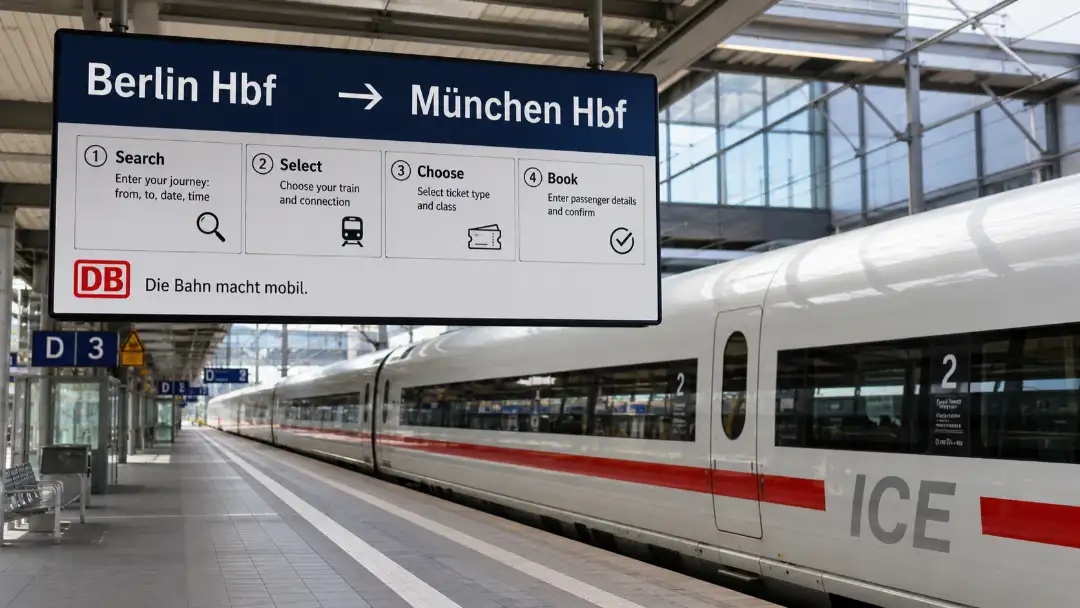
The one most people search first (berlin to munich train, munich to berlin train, ice munich to berlin), roughly 623 km covered in about four hours since the Nuremberg–Berlin high speed line opened, a trip that used to take closer to six.
Frankfurt to Cologne
Cologne to frankfurt train and frankfurt to cologne train run short but heavily used, under an hour and a half on the Cologne-Frankfurt high speed line, one of the most frequent ICE corridors in the country and a good example of how dense the schedule gets on the busiest stretches.
Hamburg to Munich
Hamburg to munich train is one of the longest domestic ICE runs in the country, crossing most of Germany north to south in under six hours, tying the port city into the same network as the south without a change of train.
Berlin to Cologne
Berlin to cologne train is one of the network’s busiest business corridors, connecting the capital with western Germany in a little over four hours, and it’s also where FlixTrain runs a direct budget alternative on the same route at a slower pace.
Checking Status Before You Travel
Deutsche Bahn’s own DB Navigator app and website (often searched as db train germany or db bahn germany) cover live status for ICE services, and it’s worth checking before a trip since Germany’s rail network has a well-known reputation for delays, more so than France’s or Japan’s networks by most punctuality measures. It’s rarely severe enough to derail a trip entirely, but building in a buffer for a connection is a good habit here specifically.
Schedule and Route Finder
If you’d rather just pick a route and see stops, timings and fare ranges directly, use the tool below. It’s fully dynamic and pulls live route data for the operator and route you select, so numbers stay current without needing to be updated on this page.
Train schedule and route finder
Pick a country and route to see stops, timings and booking links.
Stops and stop to stop times
| Station | From origin | Typical departure |
|---|
Sample daily departures
| Departs | Arrives | Duration |
|---|
Coverage here spans the Deutsche Bahn ICE network as the primary train Germany service, alongside FlixTrain as a budget alternative on the Berlin–Cologne corridor.
Booking and Tickets
When traveling on the fastest train Germany offers, booking options and ticket classes vary depending on the service and route you choose.
How to Book Any of These Trains
All are booked through IRCTC, India’s official rail ticketing platform, either via the website or app, using the train name or number.
Ticket Classes
ICE trains offer Second Class and First Class, with First Class giving more legroom, wider seats, and a quieter car rather than a fundamentally different service. FlixTrain runs a simpler single-class setup on its routes, part of how it keeps fares lower than ICE on the same corridors.
Best Time to Book
Deutsche Bahn releases tickets roughly six months ahead of departure, and unlike some networks, fares here climb steadily the closer you get to travel rather than staying flat until a cutoff. Popular corridors, Berlin–Munich especially, sell out of their cheapest fare tiers first, particularly around German public holidays. Booking a few weeks out is usually enough for a decent price on quieter routes, but for peak travel dates on the busiest lines, booking as early as the window allows is the more reliable way to lock in both a seat and a lower fare.
Why Gatimaan and Vande Bharat Are Still Capped Below Global High Speed Standards
Neither train is limited by its own technology so much as by the track it runs on. Most of India’s rail network, including the stretches Gatimaan and Vande Bharat use, is shared conventional track built for a mix of freight and passenger traffic, not dedicated high speed lines built from scratch the way Japan’s Shinkansen or Spain’s AVE network were. That’s the same story told across nearly every country on this site that hasn’t invested in dedicated infrastructure.
Why ICE Sits Below France, Japan and China on Raw Speed
ICE isn’t held back by the trains themselves so much as by the track. A meaningful share of the network still runs on upgraded conventional lines rather than dedicated high speed track built from scratch the way France’s LGV lines or China’s Fuxing network were, which caps top operating speed even where the trains themselves are capable of more. That’s a familiar story across most of the networks on this site that grew out of an existing rail system rather than starting fresh.
|
Country |
Fastest Train |
Top Speed |
|---|---|---|
|
China |
Shanghai Maglev |
267 mph (431 km/h) |
|
Japan |
L0 Series Maglev (testing) |
374 mph |
|
France |
TGV |
357 mph |
|
Spain |
AVE |
193 mph |
|
Germany |
ICE |
190 mph |
|
USA |
Brightline West (in progress) |
186 mph |
|
UK |
Southeastern Highspeed Javelin |
140 mph |
|
Canada |
VIA Rail |
100 mph |
|
India |
Gatimaan Express |
99 mph (160 km/h) |
|
Australia |
Queensland Tilt Train |
99 mph (160 km/h) |
Germany’s ICE trails France, Japan and China on outright speed, but it’s one of the densest and most punctual-on-paper networks in Europe once you account for how much ground it covers.
What Is Coming Next
Deutsche Bahn continues extending high speed track on a few key corridors, gradually cutting more upgraded-conventional stretches down toward dedicated high speed standard. The next-generation ICE 3neo trainsets are entering wider service, built for interoperability with neighboring countries’ networks as much as for raw speed.
A Few Things Worth Knowing Before You Ride
Arrive with enough time to find your platform, German stations post car formation info shortly before departure so you know where to stand, and ICE trains don’t wait long once boarding starts. Seat reservations are optional on most tickets but worth making for busy routes like Berlin–Munich or anything around a holiday weekend. Food and drink are sold on board, though bringing your own is completely normal here too.
Conclusion – Train Germany
There’s no single answer to what “the” train Germany runs on, and that’s the useful part to understand before booking anything. ICE is the fast, flagship layer, connecting Berlin, Munich, Frankfurt, Cologne and Hamburg on dedicated and upgraded high speed track. FlixTrain undercuts it on price along shared corridors like Berlin–Cologne for travelers prioritizing cost over speed. Whichever route you’re planning, book ahead through bahn.de, build in a little buffer for connections, and the rest tends to run close to schedule.