High Speed Train Finland
Finland’s rail network includes a lack of dedicated high speed lines as well as upgraded sections that support relatively high speed train Finland and accommodate some fastest trains of the world. The national railway operator, VR, operates Alstom Pendolino trains capable of reaching 220 km/h (137 mph) on certain routes. The Kairava-Lahiti line, opened in 2006, is the only section where trains reach this high speed during regular service. Additionally, the Helsinki-Seinäjoki and Helsinki-Turku routes allow speeds of 200 km/h (124 mph), while other sections, such as Seinäjoki to Oulu, allow 160–200 km/h (99–124 mph) has been upgraded to support the speeds of international travel.
The Allegro service between Helsinki and St. Petersburg, introduced in 2010, uses high speed Pendolino trains designed to meet both Finnish and Russian standards, with a 3.5-hour journey. Time provided. However, Allegro was cancelled in 2022 due to the Russian invasion of Ukraine. Infrastructure upgrades on the Russian side between the Finnish border and St. Petersburg improved the line for higher speeds, and the Finnish section received a similar upgrade for speeds up to 200 km/h.
The Fastest Train in Finland: Pendolino at 250 km/h
With a top speed of 250 km/h (155 mph) in a train speed test, the Pendolino train is Finland’s pride in high speed rail. The Pendolino, which is made by the Italian firm Alstom and run by VR Group, is perfect for the Nordic environment because it is made to glide effortlessly down Finland’s picturesque roads.
Important Features About Pendolino Trains in Finland

Major Train Routes in Finland
|
Routes |
Total distance |
Max. speed |
|---|---|---|
|
Helsinki to Tampere |
183 km |
250 km/h |
|
Helsinki to Turku |
189 km |
200 km/h |
|
Helsinki to Rovaniemi |
877 km |
200km/h |
|
Helsinki to Imatra |
283 km |
200km/h |
|
Parikkala to Savonlinna |
54 km |
120km/h |
|
Lappeenranta to Helsinki |
189 km |
200km/h |
|
Savonlinna to Helsinki |
284 km |
200km/h |
|
Oulu to Helsinki |
539 |
250km/h |
|
Lahti to Helsinki |
100km |
200 km/h |
Notes: With top speeds of 250 km/h, Pendolino Trains are the fastest in Finland on routes like Helsinki to Tampere and Oulu to Helsinki.
Travel Tip: InterCity has more routes and a wider range of ticket pricing, but Pendolino is faster. Comfort is given precedence above speed on night trains (such as the Santa Claus Express), particularly on lengthy overnight trips.
Types of VR High Speed Train Finland
Taking a train is one of the most unique ways to go across the nation and really appreciate its beauty. In addition to local and international links, the well-established Finnish railway network provides a comprehensive schedule for every route to accommodate any travel preferences. Every train in Finland is outfitted with all the amenities required for a comfortable journey and is built to contemporary standards.
Pendolino Train
High speed train Finland that operate between major cities at up to 220 km/h provide quick and comfortable transportation.

Night Trains
Sleeper options include overnight trips like the Santa Claus Express, which connects northern and southern Finland.

InterCity Trains
With amenities for passenger comfort, modern trains operate efficiently on a variety of routes.
Major Train Stations
|
Major stations |
Locations |
|---|---|
|
Helsinki station |
Southern Finland |
|
Tampere station |
Central Finland |
|
Turku station |
Southwestern Finland |
|
Joensuu station |
Eastern Finland |
|
Imatra station |
Southeastern Finland |
|
Rovaniemi station |
Northern Finland |
|
Savonlinna station |
Eastern Finland |
Options for Rail Travel from Finland to the UK
Depending on the route chosen, the distance from Finland to the UK might range from 2,000 to 2,400 km. Although there isn’t a train that runs directly between Finland and the UK, the trip can be interesting and picturesque if it combines high speed rail with aircraft or ferries.

London to Brussels: Eurostar (2 hours)
A connected European rail trip is completely possible and provides an unforgettable travel experience, even though High Speed Train Finland does not connect directly to the UK.
Comparison of High Speed Train Finland with Other Countries
With their speed, comfort, and efficiency, high speed trains are completely changing how people travel around Europe. The Pendolino in Finland compares to the fastest trains in Europe as follows:
Finland Fastest Train Pendolino

Italy Fastest Train Frecciarossa 100
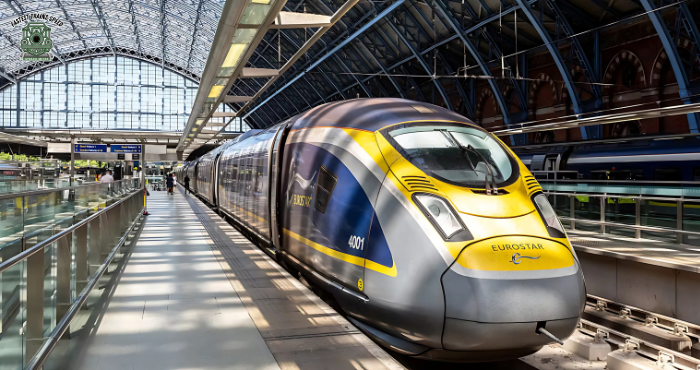
UK Fastest Train Eurostar


ICE 3 High Speed Train Germany

Renfe AVE 103 High Speed Train Spain
Pendolino is notable for its capacity to withstand frigid temperatures and the comfort it provides on Finnish railroads, even though its 250 km/h speed does not make it the fastest vehicle in Europe.
How to Purchase Pendolino Train Tickets
For both domestic and foreign passengers, purchasing a ticket for high speed train Finland is easy and accessible.
Booking Options:
Upgrades to first class provide more luxury, bigger seats, and access to the lounge. Children ages 4 to 16 receive subsidized tickets, while children under 4 ride free.
Finland’s High Speed Rail Future
The planned high speed railway between Helsinki and Turku, which would reach speeds of up to 300 km/h and reduce travel time to one hour, is a significant development. This project, which is anticipated to be finished in the 2030s, will improve domestic travel and bring Finland closer to other high speed rail standards in Europe.
Why Pick High Speed Train Finland?
There are several advantages to using high speed train Finland, whether you’re travelling between towns or taking in the splendour of Lapland:
Classes & Facilities for Travel
There are different classes and facilities provided based on the train and route:
Additional amenities on different trains could include air conditioning, baggage racks, restaurant cars, and pet travel (depending on the circumstances).
Current Proposals For Rail Links of Finland
Finland is considering proposals for new high speed rail links to connect Helsinki with other major cities. In 2018, the Green League proposed a €10 billion investment to expand the country’s rail infrastructure. Following the 2019 parliamentary elections, the government of Prime Minister Anti-Reni pledged to advance three high speed rail projects: ELSA-rata (a line to Turku in the west), a line from Helsinki to Tampere in the north, and a link connecting Helsinki. to eastern Finland.
Transportation Minister Sana Marin noted in July 2019 that projects must be well-planned and funded before construction can begin. The combined cost of these three routes is estimated at €10 billion, with preliminary planning costs of around €350 million. This substantial number is a challenge given Finland’s general transport budget of around €1 billion per election period.
In September 2019, Finland’s Ministry of Economic Affairs and Employment approved the establishment of two project companies to develop high speed rail lines. The first, the Turku One Hour Train Project Company, will focus on the Helsinki-Turku line, aiming to reduce travel time between the cities by one hour. The second, Suomirata Project Company, will oversee the development of a new high speed line between Riihimäki and Tampere. Transport Minister Sana Marin indicated that, as planned, these lines are unlikely to be completed and operational before the 2030s.

Helsinki–Turku
Currently, the only rail link between Helsinki and Turku is the Rantarta line, which takes about two hours. The idea of a more direct, faster connection has been under consideration since 1979, focusing on a route between Espoo and Salo. The new project involves the construction of a 95 km (59 mi) high speed segment that will allow trains to reach 300 km/h (190 mph), cutting travel time between Helsinki and Turku by an hour.
And will add an estimated 1.6. Millions of new rail passengers every year. In 2017, the Finnish government allocated €10 million to the project, half of which could be eligible for EU funding under the TEN-T programme. Completion is expected by 2031.


Helsinki–Airport–Tampere
Lentorata (airport rail link) has been part of the Finnish Transport Agency’s plans since 2010. After the opening of the Ring rail line in 2015, Helsinki Airport gained a rail connection through the passenger network. However, the need for a dedicated long-distance rail link to the airport was recognized with the cooperation of key stakeholders, including Fanavia (the airport authority), the mayors of Helsinki and Tampere, and the VR Group (Finland’s national rail company).
In 2019, the Helsinki Times reported that a new rail connection was being considered to connect Helsinki to Tampere via the airport. This would involve using the new airport rail line and either upgrading the existing Riihimäki-Tampere railway or building a completely new track. The expected travel time will be just one hour, and the project is estimated to cost 5.5 billion euros. The new line is expected to generate an additional 6.5 million rail trips annually, significantly increasing demand for rail travel.
Helsinki–Tallinn Tunnel
A proposed undersea rail tunnel between Helsinki (Finland) and Tallinn (Estonia) is a possible future project linked to the Rail Baltica initiative, which aims to connect the Baltic states to the wider European rail network.
The tunnel will provide a direct rail link between Finland and mainland Europe, enabling faster and more efficient travel between the two countries. The tunnel is expected to carry 12.5 million passengers annually, highlighting the potential to significantly boost cross-border rail travel between Finland and Estonia. If completed, it will increase the overall connectivity of the region and further integrate Finland into the European rail system.


Helsinki–Airport–Kouvola
In 2018, a study was launched to explore the construction of a new 106 km rail line from Helsinki to Kouvola via Kairava and Porvoo, with the aim of reducing the travel time between Helsinki and Kouvola from 1 hour 18 minutes to 53 Had to reduce to minutes. The new line will follow the proposed Lentorata route between Helsinki and Kairava and can accommodate speeds of up to 220 km/h, potentially reducing journey times on the Helsinki-St. Petersburg services up to 9 minutes.
If designed for 300 km, travel time can be reduced to 15 minutes. The project was expected to create an additional 2.8 million rail trips a year at an estimated cost of €1.7 billion. However, former Finnish transport minister Ann Berner considered it economically unviable despite the fact that cities in eastern Finland, such as Lappeenranta, Kupio, Joensuu, and Mikkeli, currently rely on the slow Kairava-Lahti line. In 2019, the Finnish government under Anti-Reni reiterated its commitment to move forward with proposals for the line, recognizing its potential to promote regional connectivity.
Former Proposals
Helsinki–Jyväskylä
In 2011, the Central Finland region launched a study to explore the possibility of a high speed rail connection between Helsinki and Jyväskylä. The study examined three possible routes: the Tampere, Rehimki, or Lahti routes, with the proposed rail line reaching speeds between 200 km/h (124 mph) and 250 km/h (155 mph).
It Is capable of the estimated cost of the project ranged from €580 million to €970 million. However, despite the findings of the study, no further progress was made on the project as of 2019, and it has been dormant, with no significant progress or funding allocated since then.
Lahti–Mikkeli
A proposed high speed rail line from Lahti to Makeli, spanning 126 kilometres (78 mi) and with an intermediate station in Hanuola, aims to significantly reduce travel times between the two cities. The new line will reduce rail distance by 29 km (18 mi) and cut travel time by 42-46 minutes if built for 220 km/h (140 mph) or 300 km if built.
If designed for an hour, it will be reduced to 50-56 minutes. 190 mph). The estimated cost of the project in 2019 was €1.5 billion. The line will offer faster connections to cities such as Mekele, Kupio, and Kajani, improving travel efficiency in the region. However, it will not provide the same benefits to Joensuu and Lapenreanta.
Conclusion
The Pendolino, Finland’s fastest train, offers a comfortable, effective, and environmentally responsible means to travel around the nation, even though it doesn’t set any speed records. It’s a fantastic substitute for domestic driving or flying, offering contemporary conveniences and dependable service.
Flying is still the quickest way to go from Finland to the UK for foreign visitors, but rail fans can still have a beautiful (although drawn-out) multi-country train journey.
High Speed Train Finland and railway network is developing gradually, focusing on modernizing and expanding infrastructure to improve connectivity between key cities and regions. Current high speed lines primarily allow speeds of 220 km/h, with the opening of the Kairava-Lahiti section in 2006 marking Finland’s entry into high speed rail. While several ambitious projects have been proposed, such as links to Tampere, Turku, and Kouvola, financial and logistical challenges have limited their progress.
Recent government proposals and studies indicate a commitment to expanding the rail network, with the aim of reducing travel times and promoting sustainable transport. New rail connections, electrification projects, and potential international connections, such as the Helsinki-Tallinn tunnel, demonstrate Finland’s commitment to integrating its rail infrastructure with the wider European network. Despite the challenges, Finland’s high speed rail initiatives reflect a long-term vision for more efficient, environmentally friendly, and connected transportation.