High Speed Rail Denmark
The Copenhagen Ringstad line, Denmark’s first high speed railway, was completed in 2018 and opened in 2019, marking a milestone in development of high speed rail Denmark. Part of the Hour Model, a government high speed rail strategy, aims to reduce journey times between four major cities Copenhagen, Odense, Aarhus and Aalborg by one hour per segment. , thereby reducing the total travel time between Copenhagen. And three hours from Aalborg. You can check your trains speed from our speedometer tool.
The strategy supports Denmark’s green transport goals, with additional high speed extensions planned for Esbjerg and Herning. In 2013, the government announced a DKK 27.5 billion Togfonden DK (Train Fund DK), financed by North Sea oil taxes, to electrify the main lines and finance the Hour Model. As of 2014, DKK 14.8 billion was specifically earmarked for the Hour Model, an important step towards modernizing Denmark’s rail infrastructure to match the standards of fastest trains in the world.
Completed Projects
Øresund Fixed Link
The Copenhagen Ringstad line, first high speed railway Denmark, was completed in 2018 and opened in 2019, marking a milestone in the development of high speed rail Denmark. Part of the Hour Model, a government high speed rail strategy, aims to reduce journey times between four major cities Copenhagen, Odense, Aarhus and Aalborg by one hour per segment. , thereby reducing the total travel time between Copenhagen. And three hours from Aalborg.
The strategy supports Denmark’s green transport goals, with additional high speed extensions planned for Esbjerg and Herning. In 2013, the government announced a DKK 27.5 billion Togfonden DK (Train Fund DK), financed by North Sea oil taxes, to electrify the main lines and finance the Hour Model.

As of 2014, DKK 14.8 billion was specifically earmarked for the Hour Model, an important step towards modernizing the infrastructure of high speed rail Denmark. The Copenhagen Ringstad line, Denmark’s first high speed railway, was completed in 2018 and opened in 2019, marking a milestone in high speed rail Denmark. Part of the Hour Model, a government high speed rail strategy, aims to reduce journey times between four major cities: Copenhagen, Odense, Aarhus and Aalborg by one hour per segment. , thereby reducing the total travel time between Copenhagen and three hours from Aalborg.
The strategy supports Denmark’s green transport goals, with additional high speed extensions planned for Esbjerg and Herning. In 2013, the government announced a DKK 27.5 billion Togfonden DK (Train Fund DK), financed by North Sea oil taxes, to electrify the main lines and finance the Hour Model. As of 2014, DKK 14.8 billion was specifically earmarked for the Hour Model, an important step towards modernizing the infrastructure of high speed rail Denmark.
Intercity Express
Between 2007 and 2017, ICE TD high speed trains extended Germany high speed trains Intercity Express (ICE) service to Denmark, running routes from Berlin to Hamburg and continuing to Copenhagen or Aarhus. When the trains reached high speeds on the Berlin Hamburg section, they transferred to standard railway lines after entering Denmark, where they ran at lower speeds.
The service extended international connectivity between Germany and Denmark, offering a direct, cross border rail option that connected major cities despite the differing rail infrastructure and speed capabilities in the two countries.

Approved Projects Of High Speed Rail Denmark
Hour Model
First stage: Copenhagen to Odense
Second Stage: Aarhus to Aalborg
Third stage: Odense to Aarhus 2013
The central phase of the hour model between Odense and Aarhus is considered the most complex and the most expensive to complete. Therefore, this phase was not considered feasible before 2020, now until 2030.
In March 2011, the Danish Ministry of Transport published a strategic analysis of new transport connections between Copenhagen and Aarhus, which included two alternative strategies to meet the hourly model between Odense and Aarhus:
The sections that have been advanced so far are:
Sections pending approval are:
The main reason why approval for the Vejle Fjord bridge is still pending is because of strong local opposition to new trains passing through the city centre.
Journey Times
|
Journey |
2013 |
Hour Model |
|---|---|---|
|
Copenhagen – Odense |
1:15 |
1:00 |
|
Copenhagen – Esbjerg |
3:08 |
2:00 |
|
Copenhagen – Horsens |
2:27 |
1:50 |
|
Copenhagen – Aarhus |
2:45 |
2:00 |
|
Copenhagen – Aalborg |
4:21 |
3:00 |
|
Odense – Esbjerg |
1:23 |
1:00 |
|
Odense – Horsens |
1:10 |
0:50 |
|
Odense – Aarhus |
1:24 |
1:00 |
|
Odense – Aalborg |
3:04 |
2:00 |
|
Horsens – Aarhus |
0:30 |
0:19 |
|
Aarhus – Aalborg |
1:19 |
1:00 |
Femern Belt Fixed Link
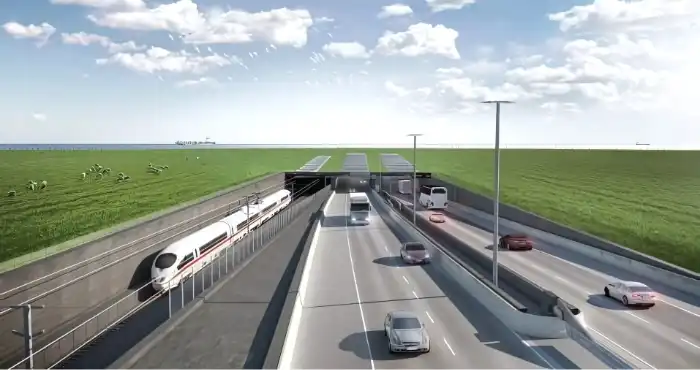
Construction of the Fehmarn Belt Fixed Link, a tunnel connecting Denmark and Germany under the Fehmarn Strait, began in 2020, with completion expected by 2029. Preparatory work, including groundwork for the tunnel element factory, is in progress. The rail section of the tunnel is designed to support speeds of up to 200 km/h, allowing for faster and more efficient rail travel between the two countries.
This major infrastructure project aims to strengthen regional connectivity, reduce travel times and promote economic cooperation in Northern Europe with operations and connectivity of high speed trains Europe.

Fehmarn Hinterland Projects
The Fehmarn Belt Fixed Link agreement between Denmark and Germany includes major rail infrastructure upgrades in both countries. In Denmark, the rail line between Ringsted and Rødby is being double tracked, electrified, and upgraded to support speeds of 200 km/h. Although initially planned as a single track route, funding has also been secured for a new combined rail and road Storström Bridge, due to open in 2027.
Upon completion of the planned link in 2029, hourly intercity express services between Copenhagen and Hamburg will be reduced. Travel time from around 4.5 hours to less than 2.5 hours for the fastest trains. This comprehensive plan will increase cross border connectivity, significantly reducing travel times between Denmark and Germany.
Technical Aspects
Signalling
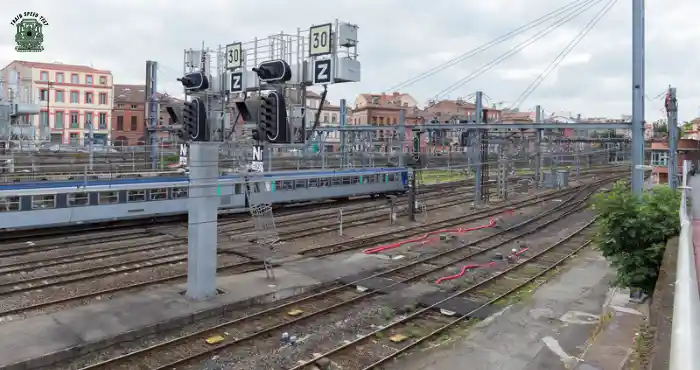
Danish railways operate with a unique taxi signaling system inspired by the Swiss model, allowing trains to travel at speeds of up to 180 km/h within Denmark (compared to 200 km/h high speed trains Switzerland).
However, on the Øresund line near the Swedish border, a five kilometer section uses the Swedish signaling system, which allows speeds of up to 200 km/h, the only place in Denmark where this is allowed. This section is mainly used by Sweden’s SJ X2 trains, which can reach maximum speed, increasing the high speed connection between Denmark and Sweden.
To allow the modernization of Denmark’s railway network, Benedenmark is rolling out European Rail Traffic Management System (ERTMS) Level 2 on all national rail lines between 2018 and 2030, a project known as the Signaling Programme. The project was tendered in four contracts:
Electrification
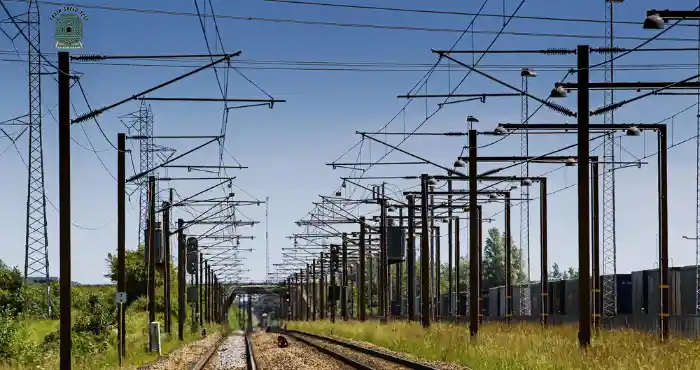
In Denmark, most intercity trains are currently operated by diesel powered IC3 trains. At the same time, only a few lines including Malmö to Flinsberg/Esbjerg, Copenhagen to Helsingør, Tinglev to Sønderborg, and Ringsted to Næstved are electrified. Has been made. To update the fleet, DSB ordered 83 IC4 diesel trains from AnsaldoBreda, capable of speeds up to 200 km/h.
However, Denmark’s long term plan for intercity service includes mainline electrification. In 2012, the Danish Parliament agreed to electrify the Lunderskov Esbjerg line and conduct feasibility studies for other lines. In 2013, a further DKK 8.7 billion was earmarked for the electrification of the Friedrichshain Frederikshavn, Roskilde Kalundberg, and Wejle Stroyer lines, which are expected to be completed by 2025, close to a modern, sustainable rail network.
New Electric Trainsets
In June 2021, DSB signed an agreement with Alstom to acquire approximately 150 electric multiple unit (EMU) trainsets, with a commitment of at least 100 units of the Alstom Coradia Stream model. These new EMUs, whose deliveries are expected to begin in 2027, are designed for a top speed of 200 km/h, in line with Denmark’s ongoing rail electrification and modernization plans.
Additionally, DSB has purchased Telgo 230 cars, which are also limited to a maximum speed of 200 km/h. These acquisitions will add to DSB’s fleet, supporting more sustainable, faster, and more efficient rail service in Denmark’s intercity network.
Proposed Lines For High Speed Rail Denmark
Along with our model, additional lines for high speed rail Denmark have been discussed as part of fixed link projects.
Fixed Link Across Kattegat
The concept of a fixed link between Copenhagen and Aarhus across the Kitty Gate is a transformative infrastructure project that has been under discussion in Denmark since 2008. The ambitious plan envisages a new high speed rail Denmark and possibly road link across the Kitty Gat Strait, linking Roskilde. and Aarhus by Kalundborg and Samsø.
It aims to significantly reduce the journey time between Copenhagen and Aarhus to just over an hour, creating a faster, more efficient route than existing options. However, this proposed link will not affect journey times between Odense and Aarhus.
Various analyses, both from government agencies and lobbying groups have explored the project’s feasibility, economic impact, and potential benefits for regional connectivity and economic growth. Supporters see it as a strategic investment in the high speed rail Denmark infrastructure, increasing mobility and strengthening ties across regions.
Second Øresund Fixed Link
The Swedish government’s interest in a second Øresund link between Elsinore and Helsingborg has led to discussions on a possible high speed rail connection along the route. Many studies favour the construction of a new transport corridor around Copenhagen, known as Ring 5, while some researchers propose a direct high speed rail line between Elsinore and Copenhagen. , which runs alongside the existing motorway.
Additionally, the Scandinavian 8 million city project envisages a high speed rail line from Oslo to Gothenburg to Copenhagen, capable of speeds of 360 km/h. Although supported by the mayors of Oslo, Gothenburg and Copenhagen, the ambitious plan lacks short or medium term government support due to an estimated cost of more than 10 billion euros, most of which will fall on the public sector.
Other Upgrades
There are plans to upgrade the railway lines from Denmark to Esbjerg and the German border to reach speeds of 200 km/h on most of these lines by 2030. These improvements are mainly focused on the implementation of European rail traffic. Management System (ERTMS), a standardized signaling and control technology that enables faster and better safety. By modernizing these lines, Denmark aims to increase cross border connectivity, reduce travel times, and support more efficient rail transport across the region.
Conclusion
The Development of high speed rail Denmark reflect a significant commitment to modernize and expand the rail network to achieve faster, more efficient travel and environmental goals. Projects such as the Hour Model and the implementation of ERTMS are part of a broader strategy to connect major cities with shorter travel times, integrate sustainable transport, and increase cross border connections, particularly with Germany. However, challenges such as local opposition to specific infrastructure, as seen with the Vejle Fjord bridge, highlight the complexities of balancing local interests with national and regional connectivity goals. Denmark’s efforts are an important step toward building a future proof high speed rail system that supports mobility, sustainability, and economic growth.